
Decode the myths and protect your engine—and your wallet
Seeing the check engine light flicker on in your Audi, BMW, Mercedes, or VW can feel like your car’s sending you a cryptic message in a language you don’t quite speak. While a quick scan with a cheap OBD2 code reader or a smartphone app might give you a code, the story behind that code is often far more complex—especially with German engineering.
Here’s why DIY diagnostics can be misleading—and why trusting a professional shop like Autoworks Colorado is often the smartest move.
🧰 What DIY Scanners Can (and Can’t) Tell You
Most affordable scanners or smartphone apps will pull generic OBD-II codes like P0171 (System Too Lean) or P0301 (Cylinder 1 Misfire). While that’s a start, it’s only scratching the surface.
✅ DIY Scanners Can:
- Show basic error codes
- Reset the check engine light (temporarily)
- Monitor live data from some sensors
❌ But They Can’t:
- Access manufacturer-specific modules (like BMW’s VANOS, or Audi’s DSG system)
- Interpret pending codes, historical freeze frames, or proprietary fault clusters
- Diagnose underlying root causes (e.g. is it a vacuum leak, a faulty MAF sensor, or bad fuel trim?)
🧠 German Cars Use Complex Logic Trees
German auto computers (ECUs and TCMs) use multi-layered diagnostic pathways. One code might be a symptom, not the root cause. For example:
- A misfire code might originate from a fuel injector issue, not just a coil pack.
- A lean code could point to intake manifold gasket leaks, not just an O2 sensor.
- A transmission code might not appear unless another sensor reports torque loss under specific conditions.
Without brand-specific scan tools and software (like BMW ISTA, Mercedes XENTRY, or VAG-COM for VW/Audi), you’re only seeing part of the picture.
🧪 Why Professional Diagnostics at Autoworks Matter
At Autoworks Colorado, we don’t guess—we diagnose.
We use:
- Factory-level diagnostic systems to pull manufacturer codes and live module data
- Smoke machines to detect vacuum and EVAP leaks
- Oscilloscopes and pressure waveform tools for in-depth analysis
- Hands-on German car expertise built from years of servicing vehicles just like yours
This means we can accurately identify problems the first time—saving you time, money, and repeat visits.
⚠️ Real-World Example: The $20 Scanner That Cost $800
A BMW owner once came to us after replacing spark plugs, ignition coils, and a fuel injector—all based on a P0304 misfire code from a cheap scanner. The real issue? A cracked intake boot causing unmetered air. The total repair should’ve been under $200—but DIY guesswork made it a lot more expensive.
🛠️ Bottom Line: Know What You’re Fixing—Before You Fix It
German vehicles are engineered to be precise—and diagnosing them requires precision too. A generic scan tool might give you a code, but only professional diagnostics will give you answers.
✅ Schedule a Diagnostic Appointment Today
If your check engine light is on, don’t play a guessing game with your car or your wallet.
Call Autoworks Colorado at 303.932.9990 or stop by our Littleton shop for dealership-quality diagnostics without the dealership price tag.

About Your Blog Post Author - Autoworks Colorado

Autoworks offers over 30 years of experience and an established reputation for quality service at an affordable price. We emphasize on personal attention and treat all of our clients like our own family. If you have a German import, we know how to fix it! We are a full service independent auto repair shop for all makes of German cars. Using only original equipment parts, we love what we do and we will get you back on the road in no time!
More From Our Blog
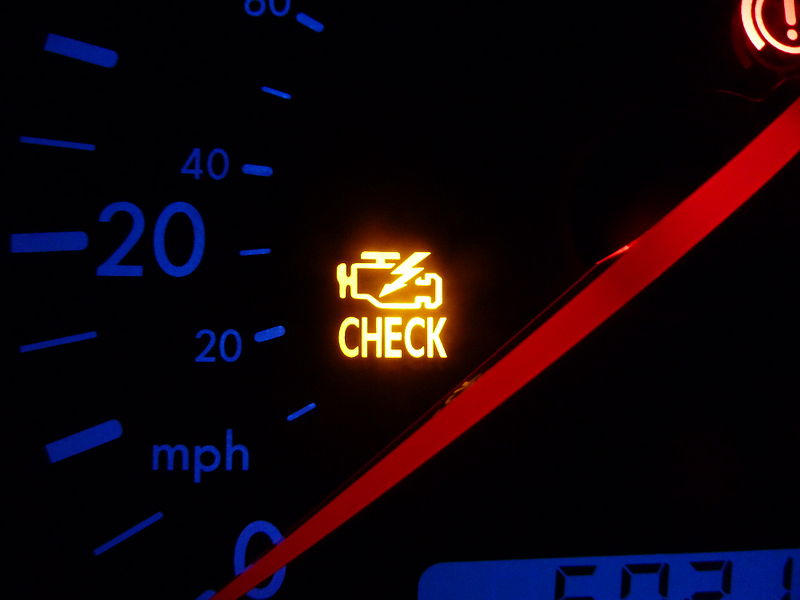
Why is My Audi’s Check Engine Light Always Turning On?
As a Colorado Audi owner, it is not uncommon to notice the check engine light (CEL) turning on from time to time. The question is, why does it keep happening? Is it something minor, or should you be concerned? As auto mechanics, we’ve come across this issue countless [...]

Understanding the Cost of Repairing a German Car: Value vs Expense
As a proud owner of a German car, you know that these vehicles come with high-quality engineering and exceptional performance. But when it comes to repairs, you may find yourself faced with a hefty bill. The cost of repairing a German car can be overwhelming, but it's important [...]
From the Autobahn to Main Street: The Ins and Outs of German Car Suspension Systems
As a proud owner of a German car, you know that it's more than just a mode of transportation. It's an extension of your personality and lifestyle. One of the most critical components of any vehicle is its suspension system. Not only does it ensure a smooth ride, [...]
The Secret Behind Keeping Your German Car’s Transmission Smooth
Keeping your Audi, BMW, Porsche or Mercedes Benz in top condition is essential for its performance and longevity. One crucial aspect of maintenance that often gets overlooked is the transmission. In this blog post, we will uncover the secret to keeping your German car's transmission running smoothly so [...]